avday
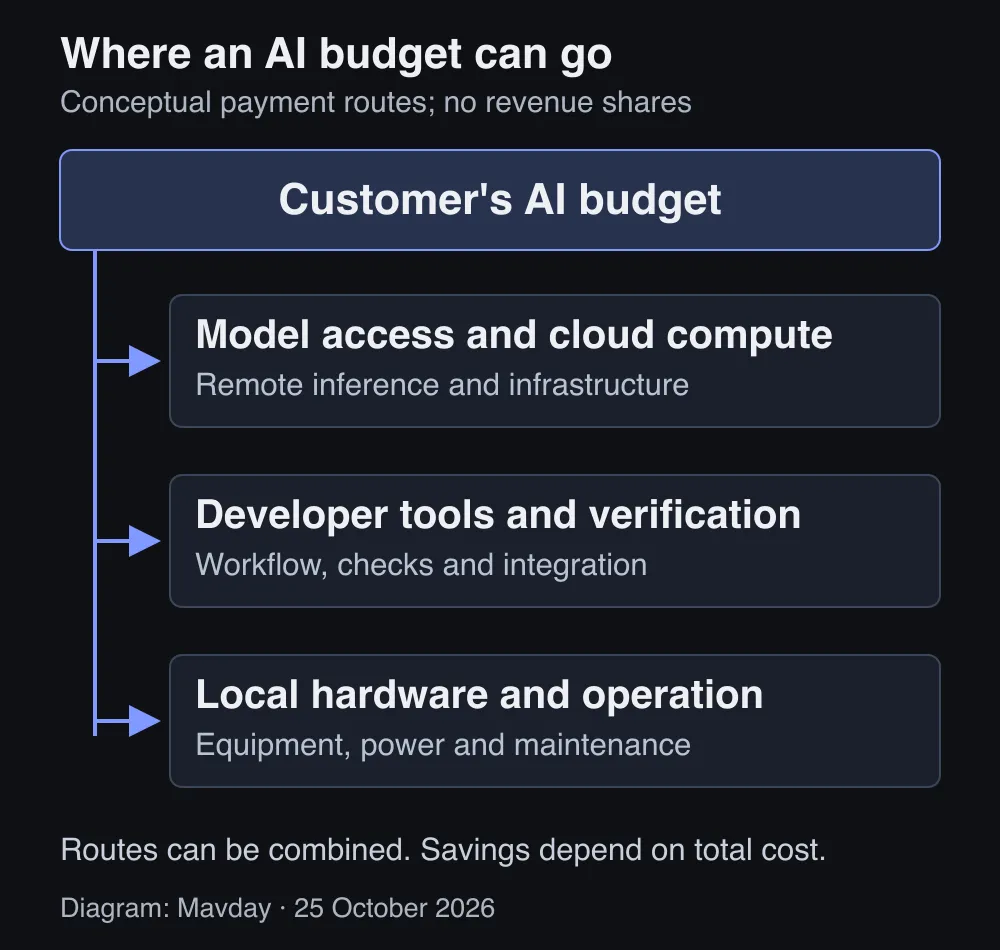
AI buyers are getting more for the same money. Token use rose in August and September, according to Ramp, yet American businesses in its spending data showed virtually no growth in token spending for two straight months.

So who gets paid in the AI bubble? Our answer: buyers first. The clouds come second, with rising profits but more cash going into building than coming in. And Amazon’s biggest AI gain in the June quarter was investment income from its Anthropic stake. Microsoft and Alphabet report on 28 October, Amazon on 29 October.
Ara Kharazian, Ramp’s lead economist, published the figures on 14 October. “In my view, the main driver is price declines at the frontier,” he writes, with efficiency and quality gains also pushing down the average price per token.
Based on what he’s heard from businesses that signed or saw OpenAI and Anthropic contracts, he writes, “the customer is in the favorable negotiating position.” Where a contract does assume higher-than-normal spending, he has heard, the labs are willing to discount from the sticker price.
Spending also leans on a few big buyers. Among Ramp businesses, 1% of firms drive 80% of spending on OpenAI and Anthropic. In September those top firms spent $9,568 per employee a month, 3.1% below their July high.
The clouds book profits while the cash goes into building
Alphabet shows the tension most clearly. In its 22 July results, Google Cloud revenue rose 82% year on year to $24.8 billion. Its operating income reached $8.8 billion, up from $2.8 billion a year earlier.
Yet after $44.9 billion of capital expenditure in the quarter, Alphabet’s free cash flow was negative $5.9 billion. Over the trailing twelve months it was still positive, at $53.3 billion.
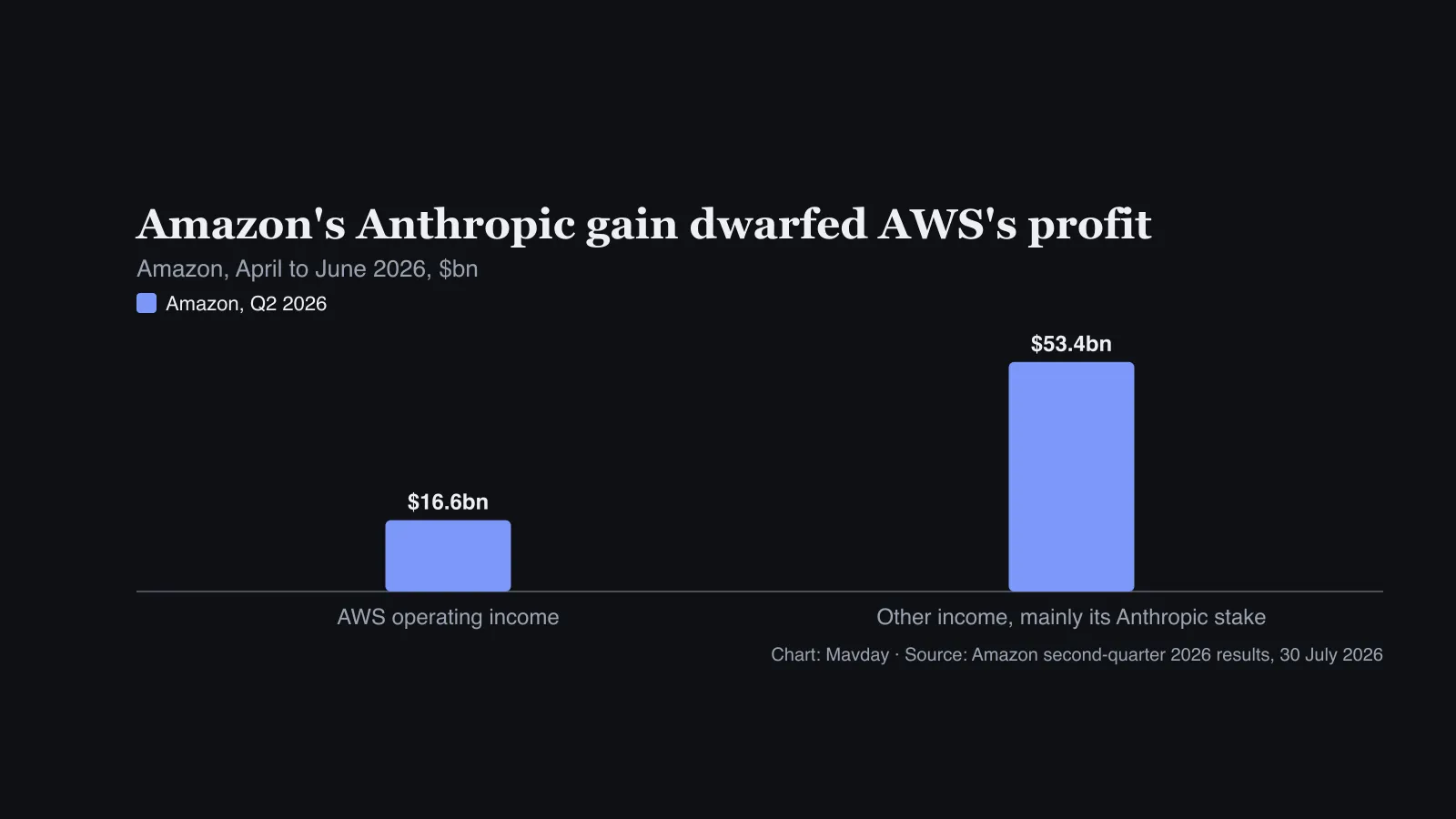
Amazon’s 30 July release tells a similar story. AWS sales grew 37% to $42.2 billion, and its operating income rose to $16.6 billion from $10.2 billion a year earlier.
But Amazon’s trailing twelve-month free cash flow became an outflow of $7.6 billion, against an inflow of $18.2 billion a year earlier. Amazon said that was driven primarily by a $66.1 billion year-on-year rise in net purchases of property and equipment, mainly reflecting investment in AI.
Amazon’s biggest AI payday of the quarter came from elsewhere. Amazon booked $53.4 billion of non-operating pre-tax other income, primarily from its Anthropic investments. That’s more than three times AWS’s operating income, and it comes from owning part of a lab.
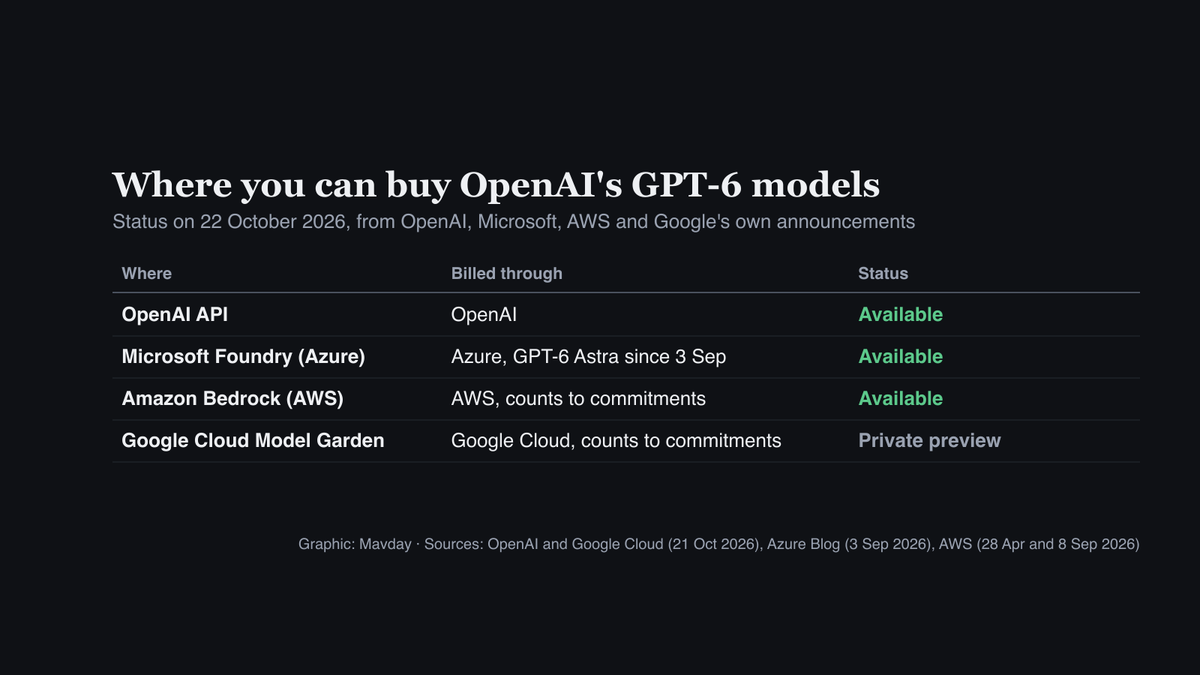
The clouds can also get paid whichever lab’s model a customer picks. OpenAI’s 21 October announcement plans OpenAI model and Codex access through Google Cloud, and Google says that usage draws down existing cloud commitments. Our breakdown of OpenAI models on Google Cloud covers what’s live.
Microsoft is harder to read, because it changed its yardsticks. It moved GitHub and other developer cloud services out of Azure, and from fiscal 2027 more future data-centre leases become operating leases, which it leaves out of its capex measure. So on 28 October, check which definition each figure uses before comparing it with last year’s.
Local models move the AI bill to your own hardware
JetBrains’ Junie Local runs a coding model such as Qwen3.6-27B on the developer’s own machine, so no cloud provider bills that inference. The catch is hardware: at least 64 GB of RAM on a Mac, or 24 GB of VRAM on a Windows PC with an Nvidia RTX GPU.
So the money moves to hardware, power and upkeep, or to tools such as Sonar’s code checks, which stay on the bill whichever model writes the code. For a buyer, the real price of a cheap model also includes the review and rework it causes. Our agentic engineering explainer covers that verification.
Our take on the AI bubble: buyers win first
Our view, from the numbers above: right now the buyer comes out ahead, with more tokens for flat spending and, by Kharazian’s account, discounts at the negotiating table.
The labs feel it most. Kharazian writes that the contracts “could contribute to price cuts without driving additional volume.” We read that as OpenAI and Anthropic needing more usage just to grow revenue.
The clouds get paid second, in profit but not yet in cash. The payback on the build is still a promise.
Amazon’s Anthropic gain is investment income, booked on the value of a stake. That’s the part that looks like a bubble to us: value booked faster than cash arrives.

The best case against us: capex comes before revenue by design. Google Cloud’s operating income more than tripled in a year, and Alphabet still generated $53.3 billion of free cash flow over twelve months. If the new capacity fills with paying customers, the cash follows.
What would prove us wrong on 28 and 29 October
| Company | Reporting period | Date | Call, GMT |
|---|---|---|---|
| Alphabet | Q3 2026 | 28 October | 20:30 |
| Microsoft | Fiscal Q1 2027 | 28 October | 21:30 |
| Amazon | Q3 2026 | 29 October | 21:00 |
We’d change our view if these numbers move this way.
| Company | Last reading | We’re wrong if |
|---|---|---|
| Alphabet | Quarterly free cash flow of negative $5.9bn after $44.9bn of capex | Free cash flow turns positive without a cut in capex |
| Amazon | Trailing free cash flow outflow of $7.6bn | The outflow shrinks while AWS operating income keeps rising from $16.6bn |
| Microsoft | Azure guidance of 44% to 45% growth in constant currency, on the new definition | Azure growth beats 45% and free cash flow rises alongside capex |
Amazon’s own guidance is for Q3 operating income of $22.5 billion to $26.5 billion. If its net profit again leans on other income, that would strengthen our view.
One limit: these accounts won’t isolate spending that moved to local models, and the cloud segments include non-AI services.
The first test is Alphabet’s free cash flow line on 28 October, ahead of its 20:30 GMT call.