avday
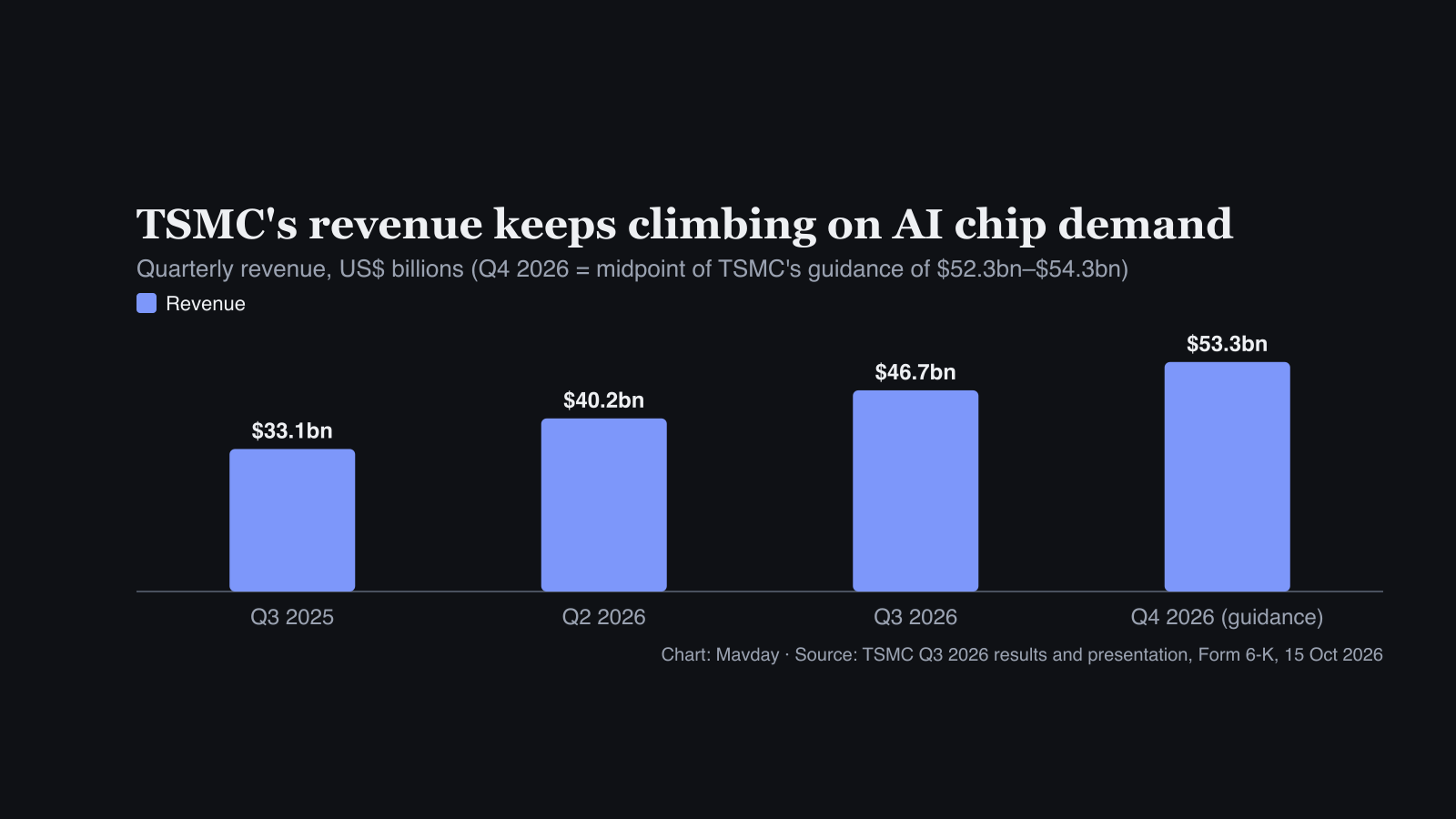
Taiwan Semiconductor Manufacturing Co. (TSMC), which makes most of the world’s advanced AI chips, reported record third-quarter results on 15 October. Revenue rose 41.2% from a year earlier to US$46.72bn, ahead of the $44.6bn–$45.8bn range TSMC itself had forecast. Net income rose 68.7% to NT$763.06bn. The company now expects revenue to grow around 44% in US dollars this year.
TSMC’s American depositary shares fell anyway, by 1.8% to $422.25 on the NYSE that day, and by another 2.3% to $412.61 on 16 October. The results told one story, that AI chip demand is not slowing, while the market was telling another: a broad sell-off in chip stocks over worries about interest rates and the cost of the AI build-out.
TSMC Q3 2026 results in numbers
All figures are from TSMC’s results release and presentation, filed with the SEC on 15 October.
| Q3 2026 | Q2 2026 | Q3 2025 | |
|---|---|---|---|
| Revenue (US$) | $46.72bn | $40.20bn | $33.10bn |
| Revenue (NT$) | NT$1,494.24bn | NT$1,270.38bn | NT$989.92bn |
| Gross margin | 66.4% | 67.7% | 59.5% |
| Operating margin | 58.7% | 60.3% | 50.6% |
| Net income (NT$) | NT$763.06bn | NT$706.56bn | NT$452.30bn |
| EPS per ADR (US$) | $4.60 |
Revenue grew 50.9% year on year in Taiwan dollars, and 41.2% in US dollars. TSMC reports in Taiwan dollars, which strengthened over the period.
Where the revenue came from
By application: high-performance computing (HPC) was 68% of revenue, smartphones 21%, and IoT and automotive 4% each. HPC grew 22% from the second quarter, and automotive grew 23%.
By process: the newest chips are taking over quickly. 2-nanometer was already 8% of wafer revenue in its first big quarter, 3nm was 33%, 5nm 28% and 7nm 10%. Together, 7nm and newer made up 79% of wafer revenue. Chief financial officer Wendell Huang said TSMC expects “the steep ramp-up of our 2-nanometer technology” to support the fourth quarter.
What TSMC expects next
- Q4 2026 revenue: US$52.3bn–$54.3bn, with a gross margin of 65%–67% and an operating margin of 56.5%–58.5%.
- Full-year 2026 growth: around 44% in US dollars, TSMC said on the call.
- Capital spending: TSMC reiterated a 2026 budget of US$60bn–$64bn, and said spending in 2026–2028 will be “even more significantly higher than the past three years”.
- Margins: it expects dilution from overseas fabs, including Arizona, to widen to 3–4% “in the next few years”.
Asked whether its long-term forecast for AI-related revenue growth, in the “mid to high 50s” percent a year from 2024 to 2029, still held, Wei said, according to a transcript of the call: “All I can say right now is the demand is extremely robust, okay? And we did not see any sign of slowdown.”
Why the shares fell
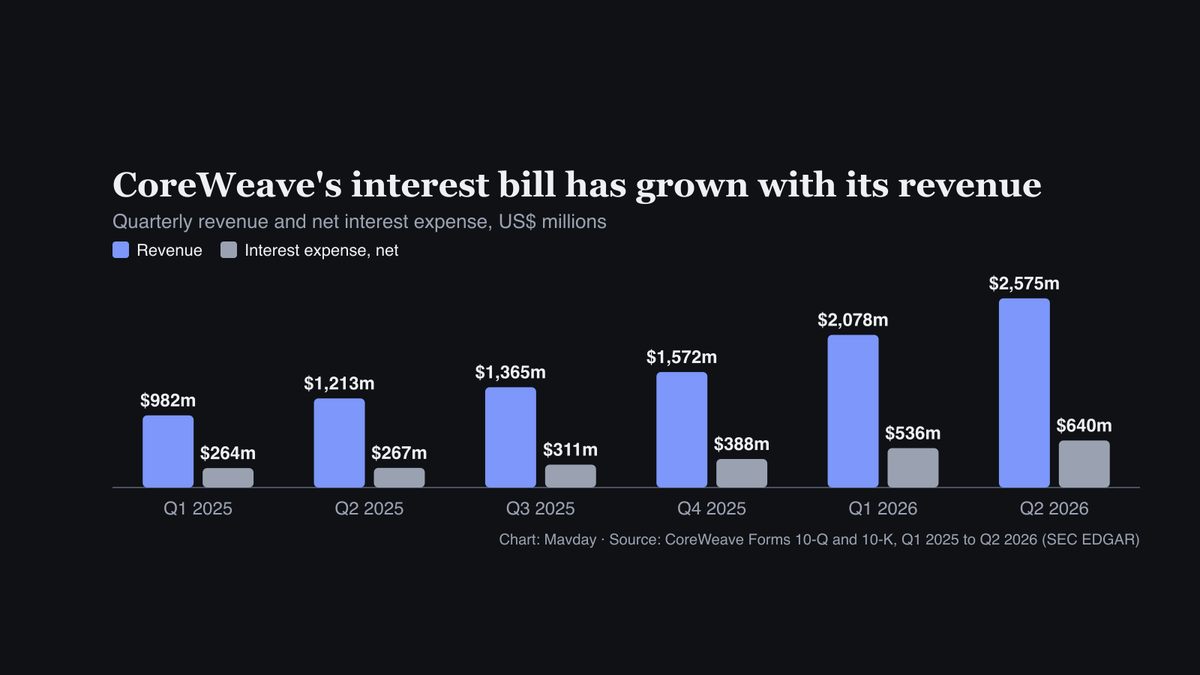
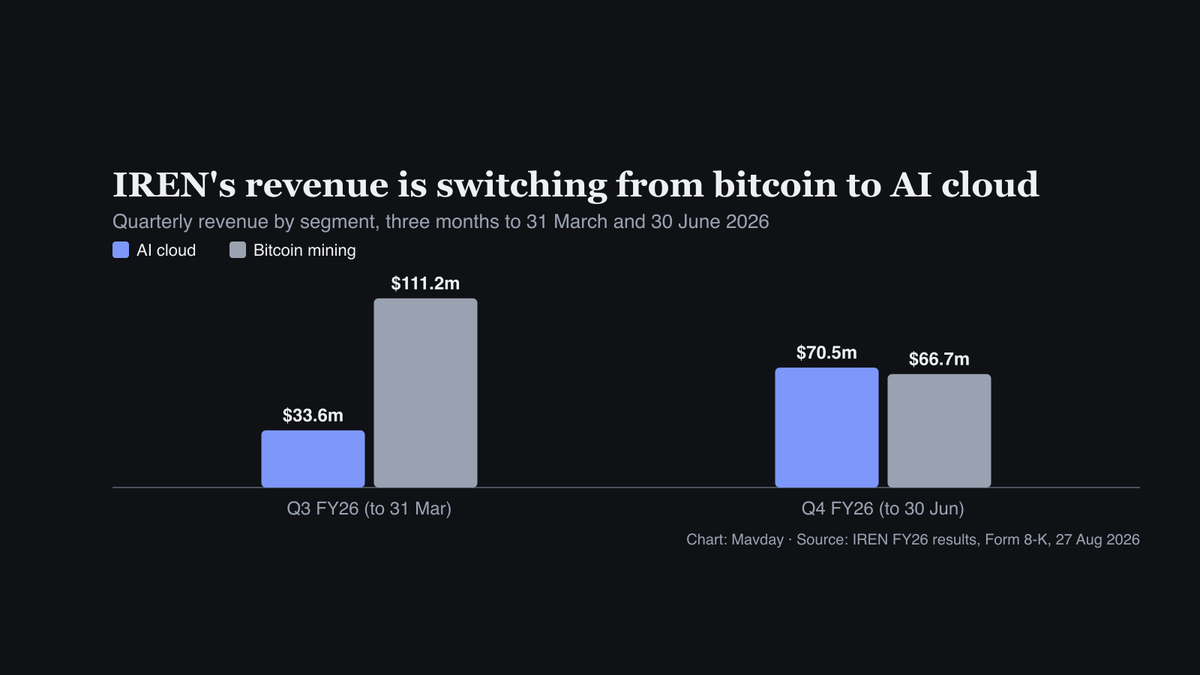
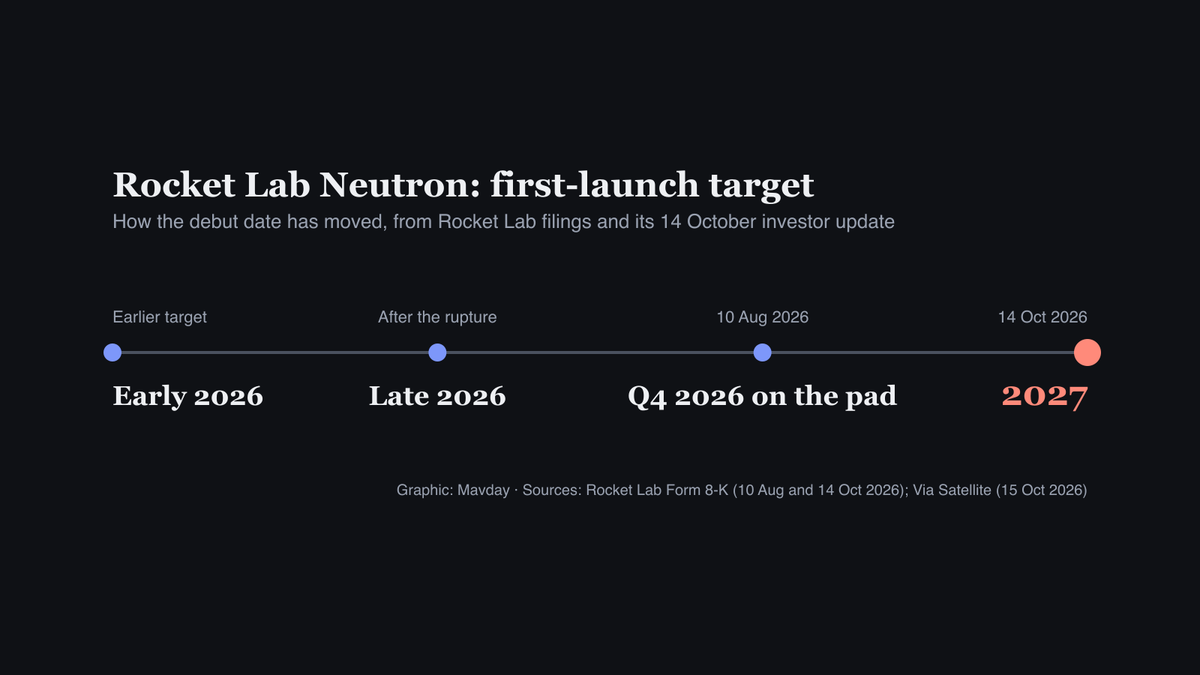
TSMC’s results landed in the middle of the worst run for chip stocks in years. Reuters reported on 15 October that the Philadelphia Semiconductor Index had “erased over $1.6 trillion in market value in an 11.6 per cent slide over the past six sessions”, on fears that high and rising interest rates could hit companies borrowing heavily to build AI infrastructure, led by a debt scare at the AI cloud company CoreWeave. The same fears knocked a third off AI cloud provider IREN in ten days, and growth stocks well outside chips, including Rocket Lab, fell with them.
Against that backdrop, the results offered two things for sellers to point at:
- Lower margins. Gross margin fell from 67.7% to 66.4% between the second and third quarters, and TSMC’s own guidance implies it stays around that level in the fourth quarter.
- Higher costs ahead. Capital spending will keep rising, and the overseas fabs will cost more to run than TSMC’s plants in Taiwan.
Neither changes the demand picture TSMC described. The ADRs were already down from $457.99 on 8 October to $430.00 on 14 October, the day before the results.
Our take
TSMC Q3 2026 FAQ
What were TSMC’s Q3 2026 earnings? Revenue of US$46.72bn (NT$1,494.24bn), up 41.2% year on year in US dollars, and net income of NT$763.06bn, up 68.7%. Earnings per ADR were US$4.60.
What is TSMC’s Q4 2026 guidance? Revenue of US$52.3bn–$54.3bn, gross margin of 65%–67% and operating margin of 56.5%–58.5%.
How much of TSMC’s revenue comes from AI? TSMC doesn’t break out AI exactly. Its high-performance computing segment, which includes AI accelerators, was 68% of third-quarter revenue.
Why did TSMC stock fall after earnings? The ADRs fell 1.8% on 15 October and 2.3% on 16 October, during a broad chip-stock sell-off driven by interest-rate and AI-debt worries. The results also showed gross margin slipping as 2nm ramps up.