avday
A power event in one of Google Cloud’s London zones knocked out services for almost eight hours on 20 October, disrupting Revolut. Google says it’s now fixed for most customers.
The outage hit europe-west2-b, one zone of Google’s London region. Google’s status page lists 38 affected products, including Compute Engine, Kubernetes Engine, Cloud SQL, Cloud Storage and BigQuery.
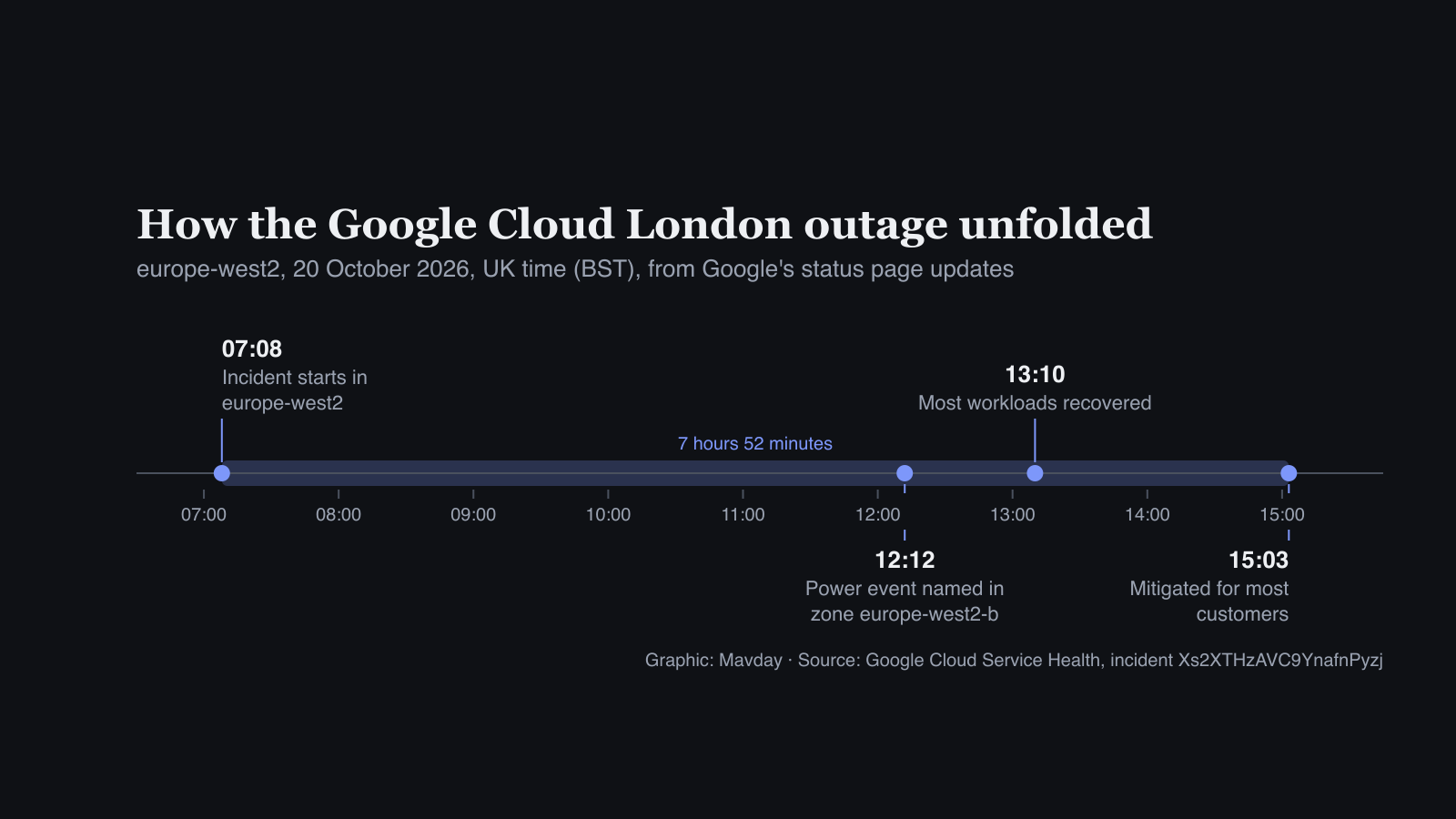
Google Cloud outage timeline
All times are UK time (BST), converted from the Pacific times on Google’s status page.
| Time | What Google said |
|---|---|
| 07:08 | The incident starts in europe-west2 |
| 09:35 | First update: investigation under way |
| 12:00 | Elevated errors and intermittent network failures; Google suggests moving workloads to another zone or region where possible |
| 12:12 | Cause identified: “A power event caused an outage within europe-west2-b zone.” Power mitigated |
| 12:58 | Existing workloads recovering first; customers “may not be able to yet create new workloads” |
| 13:10 | Most workloads in europe-west2 recovered |
| 15:03 | Mitigated for most customers; a very small number still affected |
Google hasn’t said more about the cause. It told The Register to look at the status page, and it says it will publish an analysis once its internal investigation is done.
Who was affected
Revolut is the clearest case. It told customers it was “experiencing a service disruption affecting multiple services”. In a statement it added: “We can confirm that all our customers’ money and data are safe.”
Silicon Republic reported that Revolut linked the problems to the Google Cloud outage. Card payments, ATM withdrawals, trading and in-app chat were among the services hit, according to the same report.
Bloomberg reported that other UK banks were affected too. Downdetector also showed a rise in reports for Lloyds Bank, HSBC, Royal Mail, Rightmove, DPD and BT, among others. Most of those companies hadn’t said publicly whether Google Cloud was the cause, so we’re not treating those reports as confirmed.
Why one zone took so much down
A cloud region is split into zones: separate data centres with their own power and cooling, so one failure shouldn’t take out the rest. That only helps if your systems actually run across more than one zone. Anything pinned to europe-west2-b, such as a single-zone Kubernetes cluster or a database without a standby in another zone, went down with it.
That’s why Google’s advice during the incident was to move workloads to another zone or region. It’s also why some banks plan for a whole provider failing. Monzo, for example, has described a backup platform on Google Cloud that can take over from its main one on AWS, as The Stack noted.
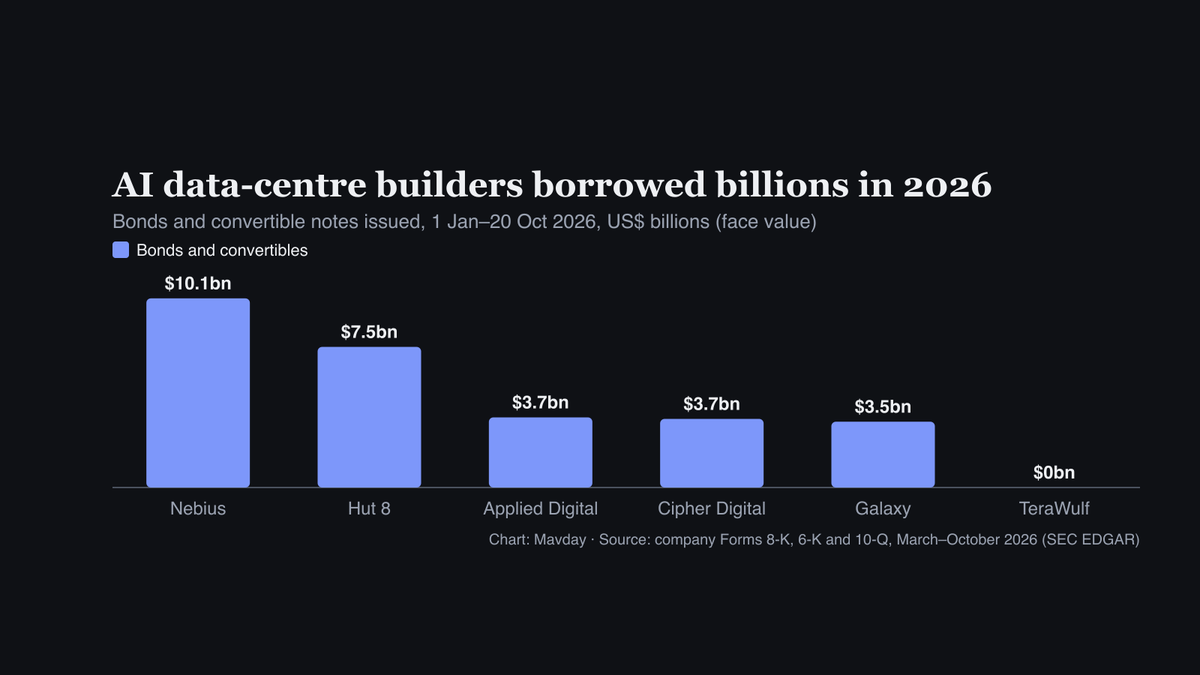
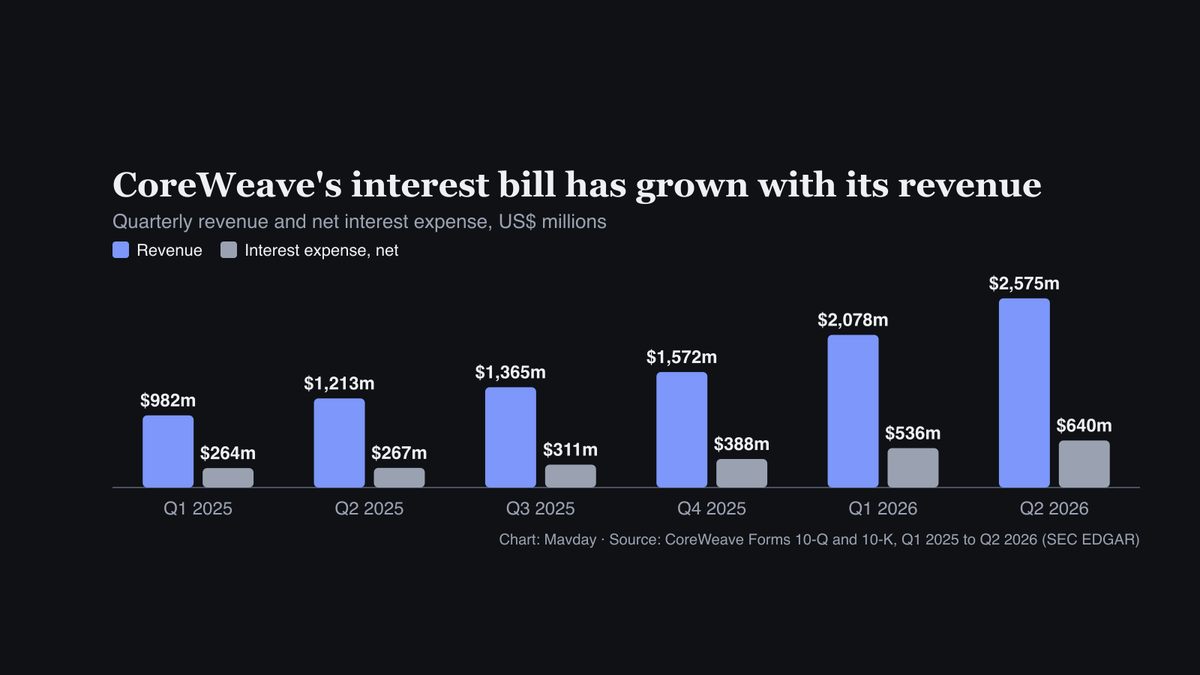
Power is becoming the hard limit for data centres everywhere, from outages like this one to the grid queues behind Microsoft’s exit from Nscale’s Loughton site. It’s also part of why AI data centres are so expensive to finance.
What to check if you run on Google Cloud
- Your zones. List what runs in a single zone. Regional GKE clusters, Cloud SQL high availability and multi-zone instance groups all spread across zones.
- Your failover plan. Make sure you can actually start new workloads elsewhere. During recovery, Google warned that creating new workloads might fail.
- Your status alerts. Subscribe to Google Cloud Service Health for the regions you use, so you hear about it before your users do.
What happens next
Google’s incident analysis is the next thing to watch. It should explain what the power event was and why recovery took most of a working day.